How Much Does a Product Hunt Launch Cost? An Honest Budget
How much does it cost to launch on Product Hunt? Launching is free. Here is the itemised budget: the $0 launch, the modest one, and what to refuse.
By Mark Fulton ·
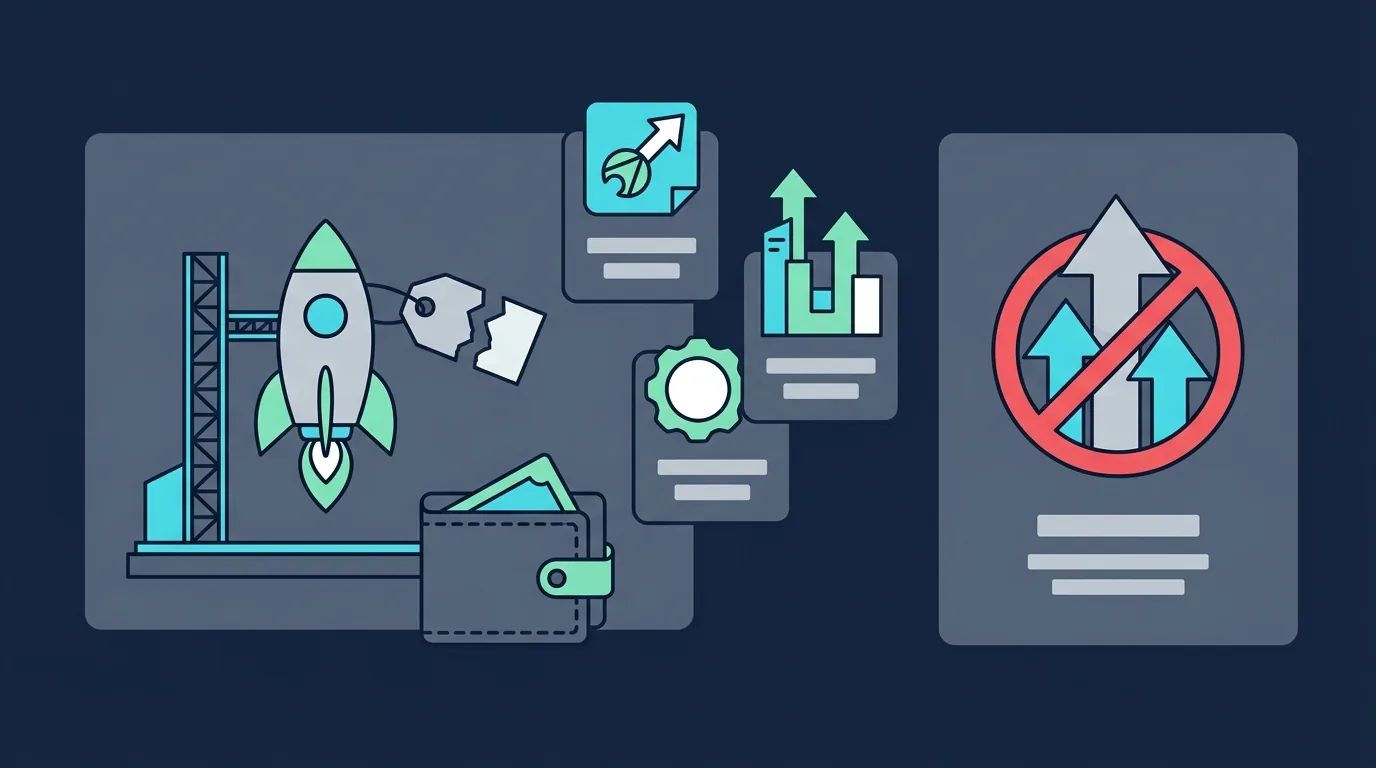
Launching on Product Hunt costs nothing. Product Hunt's own launch guide says the site is free for everyone and that you can share a product, comment and even reach Product of the Day "without spending a cent." Anything you spend around the launch (visuals, a demo video, a launch service, ads) is a choice, not a fee, and none of it is required. The one category of spending to refuse outright is paying anyone to hunt your product or send it traffic, because Product Hunt says that can get the product removed and you banned. As of October 2026, the honest budget for a solo maker is $0 plus whatever you decide a specific extra is worth.
The reason this question has so many wrong answers is that two different things get blended together: what the platform charges (nothing) and what a launch tends to pick up in supporting costs (whatever the maker is talked into). Most pages that put a dollar range on it are written by someone who sells the supporting costs. We don't sell any of them, so we'll do the sorting for you. And we'll price nothing we can't source. Where a number would be a guess, we describe the shape of the cost instead.
Is launching on Product Hunt actually free?
Yes. Product Hunt's "What to know before you launch" page says it plainly: Product Hunt is free for everyone, and all you need is a free personal account and an internet connection. The main launch guide answers "Is Product Hunt free?" with a flat yes. There is no submission fee, no fee to be featured, and no paid tier that moves your product up the daily leaderboard.
Two details from that same page matter for budgeting:
- No company accounts. Product Hunt is a person-to-person community, so you launch from a personal account. There's no brand subscription to buy.
- Ads are separate from rankings. Product Hunt describes advertising as a distinct thing from the leaderboard. You can't pay to place higher in the daily ranking, only to advertise alongside it.
So the platform cost is zero, and the ranking can't be bought. Everything else in this post is about what you might choose to add.
What do makers choose to spend money on?
When you read launch recaps, the same handful of line items keep coming up. None of them is a Product Hunt fee, and each has a free or cheap version:
- Visuals. A logo, a thumbnail and gallery images. The free version is your own screenshots on a plain background. The paid version is a designer.
- A demo video. Product Hunt lets you add one, and a short screen recording does the job. The paid version is an editor who adds captions and polish.
- A landing page. Many launches send people to a page built for the day. If you already have a working site with a clear first screen, you may not need a new one.
- Launch services and agencies. Packages that promise to "run" your launch. Prices vary wildly and the deliverables are rarely specific.
- Advertising. Paid placement on Product Hunt, or paid social pointing at your launch.
- Paid hunters and upvote services. The one you shouldn't buy at all, covered below.
Notice that one of these (visuals) is something you probably already have by the time the product is usable, and two (the video and the landing page) are things you'd want anyway for your own site. That is why the real incremental cost of a launch is usually much smaller than the ranges you see quoted.
What does a $0 launch look like?
A zero-dollar launch is not a lesser launch. It's the same listing built from material you already have. Here is the whole kit:
- Screenshots from the real product. Use real data, not placeholder text. Our guide to app screenshots for launch listings covers what survives being shrunk to a thumbnail.
- A short screen recording as the demo. One take, no music required, captions if you can add them for free in the tool you already use.
- A tagline and description you've tested on a few people before launch day. Our walkthrough on writing an app tagline shows how.
- Your existing site as the destination, as long as the first screen says what the product does and the call to action works.
- Your own time on launch day. This is the real cost, and it's why the hour-by-hour runbook exists: the day needs you answering comments, not producing assets.
If you can't tell whether a launch is worth your week at all, read whether Product Hunt is worth it for a solo indie app first. Time is the budget that actually runs out.
Which paid extras break Product Hunt's rules?
This is the part of the budget where money can lose you the launch. Product Hunt's guidance on promoting your launch is explicit about several things, and each one maps to a paid service you will be offered:
- Paying for hunters or traffic. The "Product Hunt is free" page says not to pay anyone to hunt or send traffic to your product, that it goes against the guidelines, and that Product Hunt may remove the product and permanently ban the account. The promotion guide also lists "paying a hunter or assuming that you need one" among common launch mistakes. If you're wondering whether you need a hunter at all, we wrote a plain answer on hunters.
- Asking for upvotes. The guide says not to. Ask for feedback, comments and opinions instead. Any service that sells you votes is selling you the thing you were told not to ask for.
- Giveaways that reward upvotes. A contest tied to your launch day is fine, but the guide says that if you or anyone connected to the launch, including someone you've paid, runs a giveaway that rewards people for upvoting, Product Hunt will ask you to stop and may unfeature the product.
- Spam outreach. Sending the same message to hundreds of people, or scraping addresses for unsolicited email, is called out as counterproductive. A paid "outreach blast" is this with a receipt.
Product Hunt also says spam detected in upvotes and comments can push a product lower than its raw numbers suggest. So a bought vote doesn't just risk removal. It can also leave you ranked lower than your raw numbers suggest.
Is Product Hunt advertising a launch cost?
Only if you decide it is. Product Hunt describes advertising as a legitimate way to promote a product, separate from the leaderboard and the rankings. That means an ad can't raise your launch's position, and a launch doesn't need one.
We're not going to quote an ad price. Pricing for ads isn't published on the pages we could check as of October 2026, and the figures floating around in forum threads are secondhand. If you're curious, ask Product Hunt for a current quote directly, and treat any number in a blog post, including a confident one, as unverified until it matches what they give you.
The more useful question is what you'd be buying. An ad can put your product in front of more people. It can't convert them if the first screen is confusing, the sign-up is broken, or you don't have a plan for the person who arrives and doesn't act. If any of those is true, fix that first. It's cheaper.
The itemised budget: $0, modest, and refuse
Here's the whole thing in one table. "Modest" means optional spending a solo maker can reasonably choose to make. We've left out dollar amounts on purpose, because the right number depends on your market and on quotes you should get yourself.
| Line item | The $0 launch | The modest launch | Refuse |
|---|---|---|---|
| Product Hunt listing | Free. Personal account, no fee | Same. Nothing to upgrade | Any "premium listing" that claims to buy rank. Rankings aren't for sale |
| Visuals | Your own real screenshots | A freelance designer for a clean thumbnail and gallery | Fake mockups with invented data or users |
| Demo video | Screen recording, free tools | A light edit for captions and trimming | A produced "brand film" the product doesn't need |
| Landing page | Your existing site, tightened | A single focused page if the current one is confusing | A rebuild the week of launch |
| Hunter | Post it yourself | None needed | Paying a hunter. Product Hunt lists it as a mistake |
| Upvotes and traffic | Ask for feedback and comments | Tell people the launch is live | Paid upvotes, paid traffic, vote-for-prize contests |
| Outreach | Personal messages to people you know | A newsletter if you already have one | Bulk email to scraped lists |
| Advertising | None | A small, deliberate test after the launch, if you have a reason | Ads standing in for a product people can't figure out |
| Launch services | You, plus a checklist | A one-off review of your listing | Packages that promise a top position |
| Your time | The launch day plus a few prep evenings | The same, plus a follow-up week | Launching before the product works |
Read the table from the left. The first column is complete on its own, and everything to its right is an upgrade you may never need.
How do you decide what's worth paying for?
Use three tests before spending anything:
1. Does it fix a problem a visitor would actually hit? A clearer first screenshot helps someone deciding in two seconds. A new logo rarely does. Spend on the first, skip the second.
2. Would you want it even without the launch? A good demo video keeps working on your site, in your listings and in outreach for months. A video made only for launch day is worth much less. If the answer is yes to "would I want this anyway," the launch is a good reason to do it now, not a reason to overspend.
3. Is the rule on your side? If the spend touches votes, traffic or a hunter, the answer is no, because Product Hunt has said so in writing. No amount of saved effort makes up for the product being removed.
Anything that fails all three is a refuse. Anything that passes just one is worth a small, capped spend. Cap it before you start and write the cap down.
Then spend the real budget, which is attention. A launch is a day of answering comments and a few evenings of prep. If a bigger budget would be a good idea, it is probably a plan for after the day: a permanent listing that keeps sending people long after the leaderboard has moved on. That is how we think about launch platform pricing too: the free lanes are usually enough, and paid ones should buy a specific, named thing.
Product Hunt launch cost: common questions
Do you have to pay to launch on Product Hunt?
No. Product Hunt's own pages say it's free for everyone, including reaching Product of the Day. You need a personal account, not a company one. As of October 2026 there's no paid launch tier that affects ranking.
Do I need paid visuals for a Product Hunt launch?
No. Real screenshots from your product and a short screen recording are enough. A designer helps if your screenshots are cluttered or your thumbnail is unreadable at small size, but it's an upgrade, not a requirement. Spend on whatever a visitor would actually notice.
Are paid launch services worth it?
Usually not for a first launch. The things a service can legitimately do, like polishing a listing or planning a timeline, you can do from a checklist. The things that would be hard to replicate, like guaranteed votes or traffic, are the ones Product Hunt says to avoid. If you do want outside help, pay for a defined one-off deliverable, not a promised result.
What does advertising on Product Hunt cost?
We couldn't find a published price on the pages we checked, so we won't quote one. Product Hunt says ads are separate from the leaderboard and rankings, so they're not part of what a launch needs. Ask Product Hunt for a current quote if you're curious, and treat any figure from elsewhere as unconfirmed.
Launch for free, then keep something that stays up
A launch can cost nothing, and so can a TryMy listing. A Product Hunt page is read mostly on one day. A listing in a showcase where people are browsing to try apps keeps working afterward, and TryMy listings are free and reviewed by a person before they go live. Submit your app free and link it from your launch post, so there's a permanent page for everyone who arrives after the leaderboard moves on. There's also a paid featured spot for a position and a badge, which is worth the math before you buy. It is not a traffic guarantee, and for most launches the free listing is the right place to start.