Product Hunt vs BetaList: Which One Comes First?
Product Hunt vs BetaList is a sequence, not a contest. A stage-by-stage decision tree shows which fits a landing page, beta or live app, and when to skip each.
By Mark Fulton ·
Last verified:
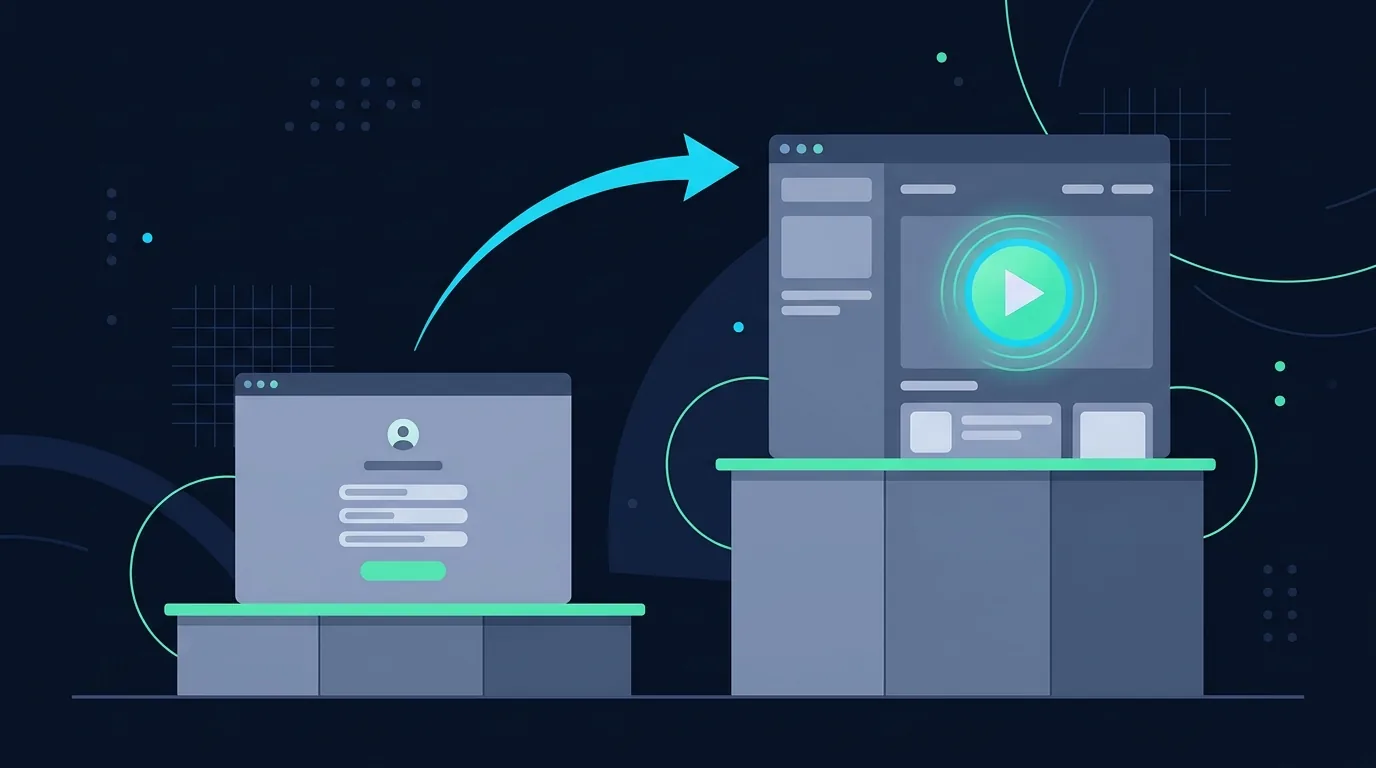
Product Hunt and BetaList are built for different stages, so the useful question is not which is better but which one your product is ready for today. BetaList is for something people can sign up for before it is finished: a pre-launch landing page or an invite-only beta. Product Hunt is for something people can open and use on the day you post. If you have only a landing page, BetaList fits and Product Hunt does not yet. If your app is live, Product Hunt fits and BetaList mostly does not, unless it only just launched. If you have both a waitlist phase and a real launch ahead, do them in that order, a few weeks apart: BetaList first, Product Hunt second. The rest of this post is a decision tree by stage, plus the two cases where you should skip one of them entirely.
We run a showcase for apps people can try today, so we have no stake in which of these two you pick. What we see over and over from the maker side is the same mistake: someone submits a live app to a pre-launch list, or posts a landing page to a platform that expects something usable, then decides the platform "doesn't work". Usually it was the wrong door for the stage. Rules below were read off each platform's own pages in October 2026. Both change their rules, so confirm anything you plan around before you pay or schedule.
What stage is each platform built for?
BetaList says its readers come "to discover what's new". Its submission criteria list what it wants: a product that is not yet available to anyone (a pre-launch landing page), a private beta open by invitation only, or something recently launched, ideally within the last few weeks. It names the common ways to miss: launched months or years ago, or already covered widely in the press. It features a small batch each day, and says so on the criteria page. Its audience is early adopters who want to sign up for things that are not finished.
Product Hunt points the other way. Its launch preparation guide says the link you submit should go to the page "where the product can be used or downloaded", and asks for a square thumbnail, at least two gallery images, a short tagline and a description before the post is ready. Its help article on scheduling a post says you can pick a day within 30 days. The audience is people browsing that day's launches who will click through and try what they find.
Put those two descriptions side by side and the split is plain.
| BetaList | Product Hunt | |
|---|---|---|
| Built for | Products people can sign up for, or get invited to | Products people can use or download |
| What the link should be | A distinct landing page on your own domain with a way to sign up | The page where the product can be used or downloaded |
| Cost | Every submission is paid; refunded in full if not selected | Launching is free |
| Chooses who gets in | Editorial review before featuring | You post it yourself; featuring is separate |
| Second chance | One pre-launch feature and one launch feature, a few weeks apart | Relaunch when you have significant new iterations |
| Best result looks like | Real signups and feedback from people who knew it was unfinished | A day of attention from people who tried the live thing |
BetaList's pricing detail is in our BetaList cost and fit review, so this post leaves money aside and concentrates on order.
Can a landing page go on either one?
Only on BetaList, and only a good one. BetaList asks for a distinct landing page that visibly belongs to your product, with clear information on what it is and who it is for, and a way for visitors to sign up or get access. Its criteria list what gets turned away: an untouched template, a page that is only an explainer video, hosted landing page builders, free hosting subdomains such as vercel.app or netlify.app, and links straight to an app store. A "follow us to be notified" line does not count as a way to sign up.
Product Hunt is a harder fit for a bare landing page. The submission field expects a product page, and the help article on posting a product notes that products still in beta or not fully released can be marked "not available yet" in the status field. That is an allowance, not a recommendation. A launch page that asks people to join a waitlist gives a Product Hunt visitor nothing to try, and a visitor who cannot try something has little reason to comment. Product Hunt also retired its old coming soon pages, which we cover in the coming soon page post, so there is no built-in way to collect interest there before launch day.
Which platform fits each stage?
This is the decision tree. Find the row that describes what you can show someone today, not what you will have in a month.
| Your stage | Right now, do this | Why |
|---|---|---|
| Idea plus landing page, no product anyone can touch | BetaList, once the page has a real signup form and your own domain. Skip Product Hunt for now | BetaList accepts unreleased products with a landing page. Product Hunt expects a link where the product can be used |
| Private beta, invite only | BetaList first. Keep the invite flow short, because the featured day is the point where you need testers fast | BetaList lists invite-only betas as an ideal fit. This is the stage it was made for |
| Public beta, open signup, rough edges | Either, but pick one for now. Use BetaList if you still want testers and feedback. Use Product Hunt if you are ready to be judged on the working product | Both accept it, and the audiences ask for different things |
| Live, stable, anyone can use it | Product Hunt. Add BetaList only if you launched within the last few weeks and never used its pre-launch slot | BetaList's criteria call a product that has been live a long time poor fit |
| Live for months or years, no big change | Neither as a launch. Wait for a significant update, then relaunch on Product Hunt | Both platforms are about newness |
Treat the middle row as the real decision. Public beta is where most indie apps sit, and it is where makers do both at once, badly. Choose by the question "do I want people to tell me what is broken, or tell me what they think of the finished idea?" and let that pick the platform.
How far apart should the two be?
BetaList's criteria give you the minimum: each startup gets up to two chances, one before launch and one at launch, with at least a few weeks between them so they feel like separate moments. The criteria also warn against re-submitting "so soon after a previous feature that nothing has visibly changed". That tells you what the gap is for. Something has to change between the two posts, and that change is the story the second one tells.
A sequence that follows those rules:
- Weeks before launch: BetaList with a landing page and signup form. Your goal is a list of people who asked to be told, plus a few who reply with feedback.
- In between: let the beta run. Fix what the early users hit. Write down which questions came up most, because those become your Product Hunt tagline and first comment.
- A couple of weeks before the launch day: schedule the Product Hunt post. The scheduling article allows up to 30 days ahead, and the preparation guide suggests using the time to tease the launch and collect followers.
- Launch day: Product Hunt, with the working product, a short demo and the BetaList signups told it is live today.
The length of step 2 depends on how fast you fix things, not on a rule. If you cannot say what changed between your BetaList post and your Product Hunt post, wait longer. A gap of weeks with nothing different tells neither audience anything new.
What carries over from one to the other?
More than you would think, which is a good reason to prepare once.
- The one-line pitch. BetaList has a pitch field and Product Hunt has a tagline capped at 60 characters, per its preparation guide. Write the 60 character version once and use it for both. Our guide on writing an app tagline covers how.
- Screenshots and a short demo. Product Hunt wants a square thumbnail and two or more gallery images. Make the set at the larger size and crop down. Our post on app screenshots for launch listings lists sizes, and a short demo GIF works on both.
- The description. Product Hunt caps its description at 500 characters. A version that short reads fine on BetaList as well.
- The list. Every BetaList signup is a person to tell on launch day. That list is the main thing BetaList gives you that you can use on Product Hunt, because nobody on Product Hunt can send a launch post to strangers in advance.
What does not carry over is the posture. BetaList visitors expect rough edges and want to shape the product. Product Hunt visitors expect something finished enough to judge. Write the second post in the voice of a maker who listened and shipped, not the first one reposted.
When should you skip BetaList?
Skip it when the product is already live and has been for a while, since its criteria call a product launched months or years ago a poor fit. Skip it when your landing page is a template or sits on a free subdomain, because the criteria turn those away and the fee is wasted if you are not selected. It does refund the payment automatically in that case, according to its support page, but you still lose the time. Skip it when you do not categorize as a technology startup: blogs, courses, newsletters, agencies and general online stores are listed as poor fits. And skip it if you cannot let people in within days of the feature, because a signup form that leads to silence is worse than no page.
When should you skip Product Hunt?
Skip it when there is nothing yet to use or download. A landing page with a waitlist is a thin offer for a platform that links people straight to the product. Skip it when you have no one to tell on the day, because a launch with no early users and no list depends entirely on strangers. We go through that tradeoff in whether Product Hunt is worth it for indie apps. And skip it for now if the product still breaks on the first click, since the first impression is the whole point. Product Hunt's alternatives are fine places to start smaller, and we list them in Product Hunt alternatives for indie apps.
If you cannot decide between a waitlist and shipping, our post on waitlist or launch now makes the argument from the other direction.
What should you do this week?
Pick your row in the stage table and do only what it says. If it says BetaList, finish the landing page and the signup flow. If it says Product Hunt, get the thumbnail, two gallery images, tagline and description ready, then schedule the date. If you are somewhere between the two, finish the beta first and let the order sort itself out.
Once people can try your app, submit it to TryMy free. Listings are reviewed by a human before they go live, and a working link is the main requirement.
FAQ
Should I launch on BetaList before Product Hunt?
If you have a pre-launch or beta stage ahead of you, yes. BetaList lists unreleased and invite-only products, and it allows one feature before launch and one at launch, with at least a few weeks between them. If your product is already live and you never used BetaList, there is little reason to go back to it first. Go to Product Hunt.
Can I use the same assets on both?
Mostly. The pitch, the screenshots and the demo carry over. Make the images at the larger size and crop down for Product Hunt's square thumbnail. Keep the tagline within Product Hunt's 60 character cap and it will fit BetaList too. The tone should change between the two: feedback-seeking on BetaList, finished and confident on Product Hunt.
Which one brings more signups?
Neither platform publishes a per-listing figure we could verify, so we will not give you a number. The honest answer is that they bring different kinds of signup. BetaList brings people who asked to be told when something is ready. Product Hunt brings people who tried a live product that day. Judge each by your own analytics: BetaList adds UTM parameters to its links so traffic shows up under the source "betalist".
Do I need a live product for Product Hunt?
Product Hunt's preparation guide says the link should lead to a page where the product can be used or downloaded, and its posting article lets you mark a product "not available yet" if it is still in beta. So a beta can be posted, but a waitlist-only page is a poor fit. If people cannot try it, you are asking them to comment on a promise.